
Dyscalculia vs. Math Anxiety: How to Tell the Difference

Your child breaks down in tears the moment math homework appears. They avoid tackling word problems. They freeze up during timed tests. And no matter how much you work with them, basic math facts just will not stick.
So what is it? Is your child anxious about math, or is something deeper going on? Could it be dyscalculia — a neurological learning disability that affects the way the brain processes numbers?
The answer matters more than you might think. Because while both dyscalculia and math anxiety can look strikingly similar on the surface, they require completely different approaches to support. Treating anxiety when the real issue is dyscalculia — or vice versa — can leave your child stuck, frustrated, and falling further behind.
In this post, we will break down the key differences between dyscalculia and math anxiety, how to recognize which one your child might be experiencing, and why the right diagnosis is the first step toward real progress.
What Is Dyscalculia?
Dyscalculia is a specific learning disability that affects the brain's ability to understand and work with numbers. It is not about being bad at math or needing more practice. It is a neurological difference in how the brain processes numerical information — and it affects an estimated five to seven percent of children.
Children with dyscalculia struggle with number sense — the intuitive understanding that numbers represent quantities. They may have difficulty recognizing that five is more than three, or understanding what happens when you add or subtract. Even basic arithmetic can feel like trying to read a foreign language.
Critically, dyscalculia is not caused by lack of effort, poor teaching, or low intelligence. Many children with dyscalculia have average or above-average intelligence. The struggle is specific to how their brain processes mathematical concepts.
What Is Math Anxiety?
Math anxiety, on the other hand, is an emotional response — a feeling of fear, nervousness, or panic when faced with math tasks. It is not a learning disability. It is a psychological reaction that interferes with performance, even when the person has the ability to do the work.
Math anxiety is incredibly common. Studies suggest that up to 60 percent of students experience some level of worry or discomfort around math. The anxiety can be triggered by past negative experiences, fear of being judged, time pressure, or simply the belief that they are not a math person.
When a child experiences math anxiety, their stress response kicks in. Their working memory — the mental workspace they need to solve problems — gets consumed by worry. This makes it harder to concentrate, recall facts, and think clearly, which in turn leads to mistakes and reinforces the anxiety cycle.
The Key Differences Between Dyscalculia and Math Anxiety
Here is the most important distinction: dyscalculia is a cognitive difficulty with understanding numbers, while math anxiety is an emotional response to doing math. Think of it this way — doing math with dyscalculia is like trying to hike with an injury. You physically cannot reach the peak. Doing math with anxiety is like hiking while constantly worrying about what might happen if you try. The fear holds you back, not the ability.
That said, these two conditions frequently overlap. Many children with dyscalculia develop math anxiety as a result of repeated failure and frustration. And some children with math anxiety may appear to have dyscalculia-like symptoms because their anxiety is so severe it prevents them from accessing their actual abilities.
When the Struggle Begins
Dyscalculia typically shows up early — often in kindergarten or first grade when children are first learning to count, recognize numbers, and understand basic concepts like more and less. The struggle is present from the beginning, even before formal math instruction starts.
Math anxiety, on the other hand, usually develops later — often in response to timed tests, public performance pressure, or repeated experiences of failure. A child might do fine with math in early grades but develop anxiety as the stakes and complexity increase.
What Triggers the Difficulty
With dyscalculia, the struggle is constant. It does not matter whether the child is calm or stressed, working at home or at school. The difficulty is always there because it is rooted in how the brain processes numbers.
With math anxiety, the struggle is triggered by specific situations — timed tests, being called on in class, fear of making mistakes in front of others. When the pressure is removed, performance often improves.
What Actually Helps
This is where the distinction becomes critical. If a child has dyscalculia, anxiety-reduction strategies like breathing exercises or positive self-talk will not fix the underlying issue. They need specialized instruction that teaches number sense from the ground up — often using multi-sensory, concrete approaches that build foundational understanding.
If a child has math anxiety, interventions like cognitive behavioral therapy, building confidence through success, reducing time pressure, and creating a supportive learning environment can make a significant difference. The child already has the ability — they just need to be able to access it without fear getting in the way.
Signs Your Child Might Have Dyscalculia
If you are wondering whether dyscalculia might be the issue, here are some key signs to look for:
Difficulty understanding that numbers represent quantities.
Struggles with basic number sense — for example, not intuitively knowing that eight is more than five.
Relies heavily on finger counting, even for simple problems.
Cannot memorize basic math facts despite extensive practice.
Difficulty with patterns, sequencing, or understanding the relationship between numbers.
Struggles with everyday math tasks like telling time, handling money, or understanding schedules.
Frequently makes errors even when they understand the steps of a problem.
These struggles persist regardless of how much practice or tutoring the child receives. The issue is not effort — it is how their brain processes numerical information.
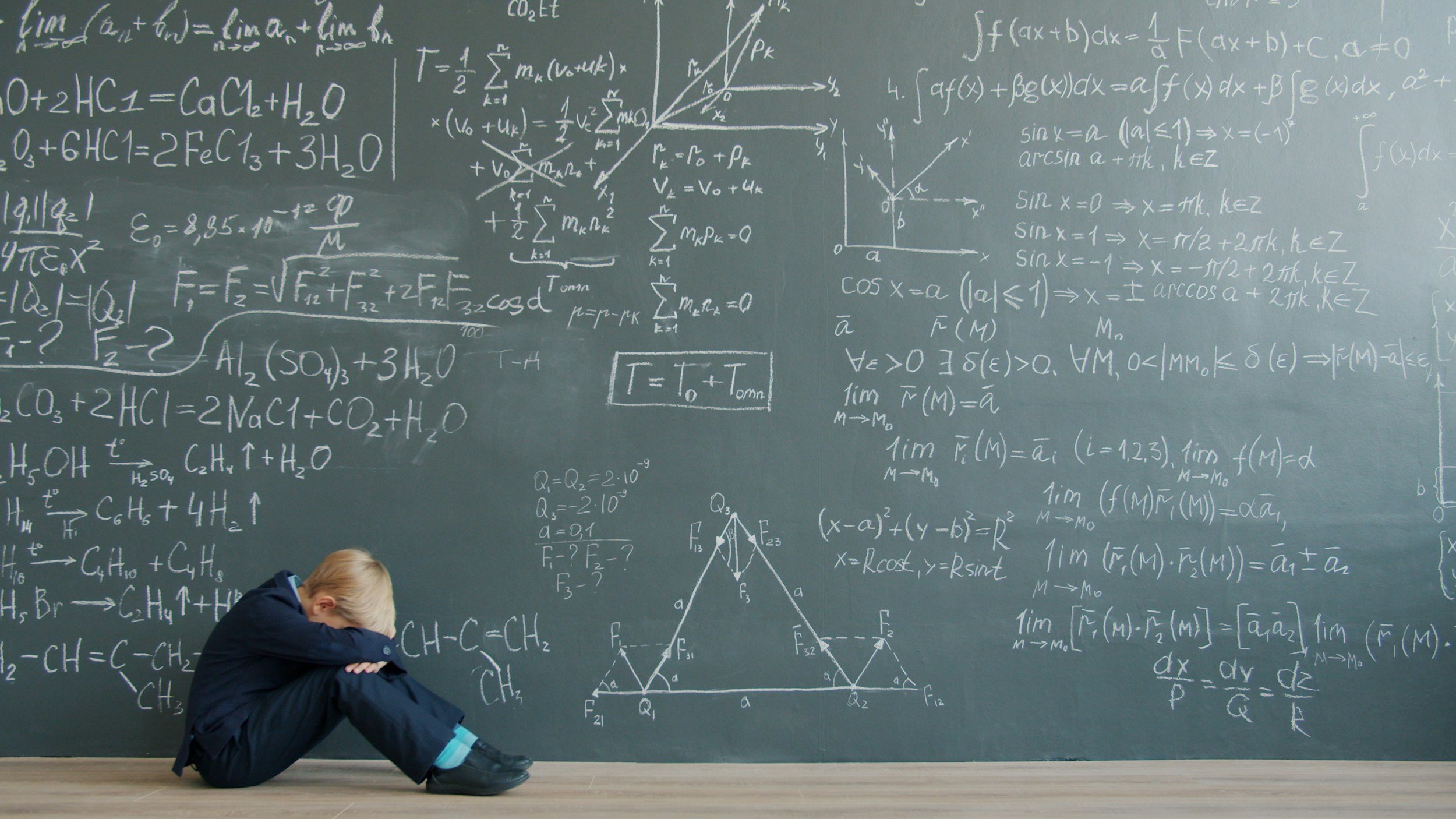
Signs Your Child Might Have Math Anxiety
Math anxiety, by contrast, shows up as an emotional and physical response to math situations:
Physical symptoms like sweating, racing heart, stomachaches, or headaches before or during math tasks.
Avoidance behaviors — delaying homework, skipping math class, or refusing to participate.
Negative self-talk — statements like I am terrible at math or I will never get this.
Performance anxiety — doing fine at home but freezing up during tests or when called on in class.
Improved performance when pressure is removed — for example, doing better on untimed assessments.
Panic or emotional meltdowns when faced with math homework or tests.
If these signs sound familiar, the issue may be rooted in fear and stress rather than an inability to understand numbers.
Can a Child Have Both Dyscalculia and Math Anxiety?
Absolutely. In fact, it is quite common. When a child has dyscalculia and struggles with math year after year, they often develop math anxiety as a secondary response to chronic failure and frustration. The brain naturally wants to avoid experiences that are painful or traumatic — and for a child with dyscalculia, math can feel exactly that way.
This is why a comprehensive evaluation is so important. A skilled evaluator can tease apart what is cognitive and what is emotional, and develop a plan that addresses both.
Why Getting the Right Diagnosis Changes Everything
When parents assume their child just has math anxiety and focus solely on building confidence or reducing stress, they miss the underlying learning disability. The child continues to struggle because the real problem — their brain's difficulty processing numbers — has not been addressed.
On the flip side, when parents assume their child has dyscalculia and push for more tutoring or drill-and-kill practice, they may be making the anxiety worse. A child who is already terrified of math does not need more pressure — they need strategies to manage their fear and rebuild their confidence.
The right diagnosis opens the door to the right support. It ensures that interventions are targeted, effective, and designed to address the actual root cause of the struggle.
How to Get a Clear Answer: The Role of Evaluation
If you suspect your child has dyscalculia, math anxiety, or both, the most important step is to seek a comprehensive neuropsychological or educational evaluation. A thorough assessment can measure your child's number sense, computation skills, mathematical reasoning, working memory, and emotional responses to math tasks.
The evaluation will also look at other factors that might be contributing to the struggle — such as ADHD, processing speed deficits, or language-based learning disabilities. Sometimes what looks like a pure math issue is actually more complex.
The result is a clear picture of what is going on and a roadmap for how to help. You will know whether your child needs specialized math instruction, anxiety management strategies, accommodations at school, or a combination of all three.
The Bottom Line
Dyscalculia and math anxiety are not the same thing — but they can look very similar, and they often occur together. One is a neurological learning disability that affects how the brain processes numbers. The other is an emotional response that interferes with performance even when the ability is there.
Understanding the difference is not just about putting a label on your child's struggle. It is about making sure they get the right kind of help — help that actually works.
If your child is struggling with math and you are not sure why, do not wait. The sooner you get clarity, the sooner you can intervene — and the better the outcome will be.
Not sure if it is dyscalculia or anxiety? Contact Dr. Koffman today to schedule a comprehensive evaluation and get the answers your child needs to succeed.