
When Anxiety Looks Like Defiance: Recognizing the Hidden Signs

There is a child who refuses to go to school. Another who explodes when asked to do homework. One who shuts down at the dinner table when someone asks about his day. One who argues, stalls, and pushes back on nearly every request.
These children are often described the same way: difficult. Oppositional. Strong-willed. Maybe even a behavior problem.
But what if the behavior isn’t the problem? What if it’s the signal?
For a significant number of children, what looks like defiance on the surface is anxiety underneath. And because anxiety in children rarely looks the way adults expect it to — quiet, tearful, visibly worried — it gets missed. Sometimes for years.
Why Anxiety Doesn’t Always Look Like Anxiety
When most people picture an anxious child, they imagine someone who is visibly nervous. Clingy, tearful, reluctant. And some anxious children do present that way.
But anxiety is fundamentally about perceived threat and the drive to escape it. And for many children — particularly those who are temperamentally more intense, who have a harder time with emotional regulation, or who have learned that vulnerability isn’t safe — the response to that threat doesn’t look like withdrawal. It looks like fight.
Refusing to do something feels like control when everything feels out of control. Arguing buys time. Melting down gets the scary thing taken off the table. Shutting down protects against the possibility of failure or humiliation.
From the outside, all of this looks like a child who won’t cooperate. From the inside, it’s a child doing everything they can to feel safe.
The Hidden Signs: What Anxiety Looks Like in Disguise
Learning to recognize anxiety beneath defiant behavior requires looking past the surface and asking a different question — not “what is my child doing?” but “what might my child be afraid of?”
Refusal that spikes around specific situations. A child who is generally fine but becomes a completely different person before school, before tests, before social events, or when faced with a new task is showing you something important. The refusal is not random. It maps onto fear.
Meltdowns that seem disproportionate. When a child loses it completely over something that seems minor — a change in plans, a mistake in a game, being told “no” — it’s worth asking whether the reaction is really about that moment, or whether it’s the overflow of sustained anxiety that has been building all day.
Arguing and negotiating as stalling tactics. Some anxious children become remarkably skilled debaters. Every instruction is contested. Every boundary is challenged. But look closely and you’ll often find that the arguing tends to cluster around things the child is afraid of: starting something new, being evaluated, facing the unknown.
Somatic complaints with no medical cause. Stomachaches on Sunday nights. Headaches before tests. Nausea when a social event is approaching. The body expresses what the mind can’t name. When medical causes have been ruled out, these physical symptoms often point directly to anxiety.
Aggression when pushed toward feared situations. A child who becomes aggressive — verbally or physically — when pressed to do something they’re anxious about is not being manipulative. They are in a state of genuine threat response. The nervous system has escalated to fight because flight isn’t available.
Shutting down and going silent. Withdrawal is the flip side of aggression. Some anxious children don’t fight — they disappear. They become monosyllabic, uncommunicative, hard to reach. What looks like sullenness or indifference is often a child who has gone into emotional lockdown.
Intense need for control over their environment. Rigid routines, inflexibility about small things, strong reactions when plans change — these can all reflect an anxious child’s attempt to manage a world that feels unpredictable and overwhelming.
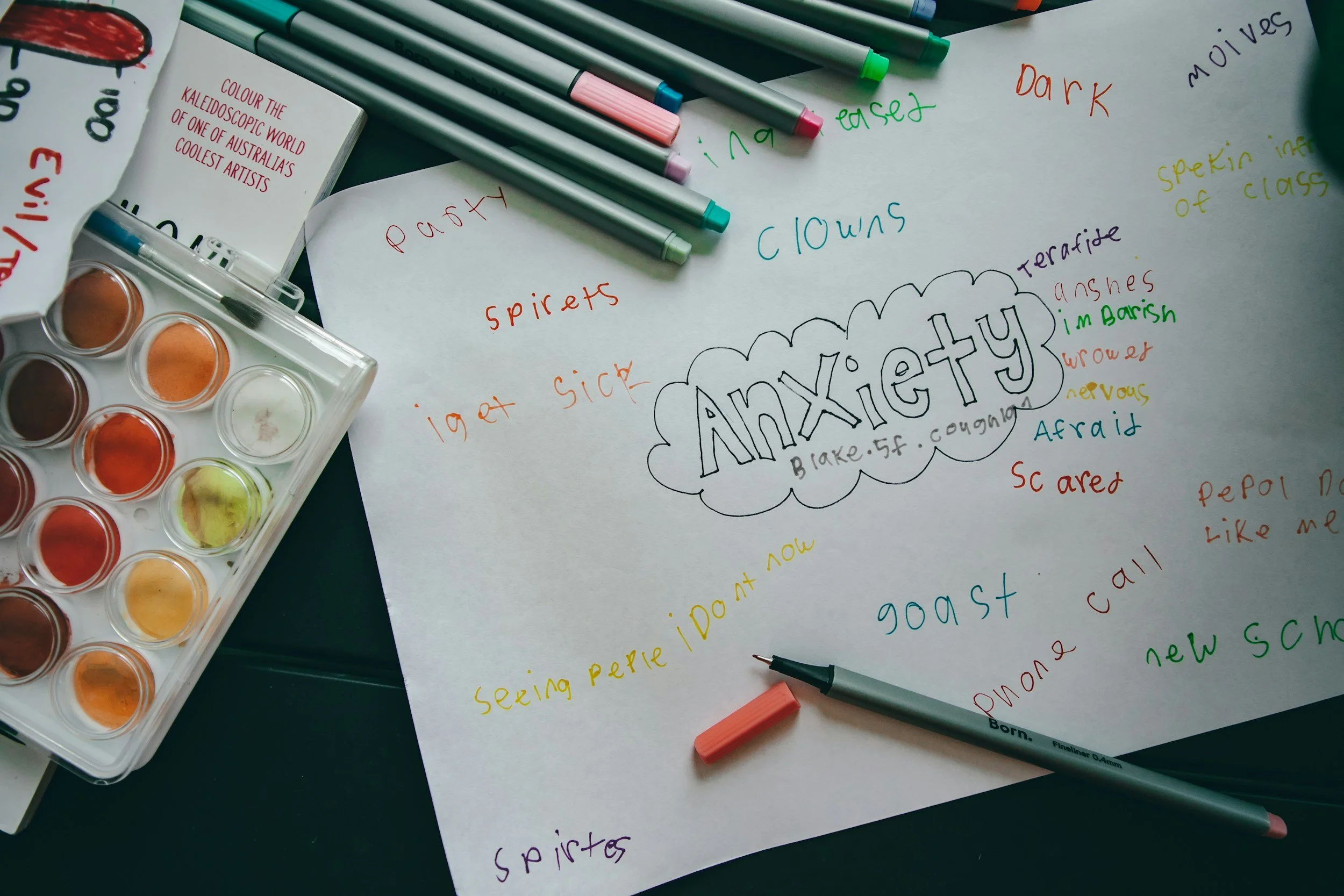
Why This Gets Misread — and Why It Matters
The consequences of misreading anxiety as defiance are significant — both for the child and for the parent-child relationship.
When we respond to defiance with consequences, we are responding to the behavior and missing the cause. The child who refuses to go to school doesn’t need a stricter response — they need someone to understand what school feels like from the inside. The child who melts down over homework doesn’t need more punishment — they need help with whatever about the homework is genuinely overwhelming.
Disciplinary responses to anxiety don’t just fail to help. In many cases they make things worse, because they add shame and relational rupture to an already overwhelmed nervous system.
Meanwhile, the child — who often doesn’t have the self-awareness or language to say “I’m anxious” — learns that their internal experience is invisible, that they are seen as the problem, and that the adults around them don’t understand what’s happening. That’s a painful and isolating place to grow up.
What to Do When You Suspect Anxiety Is Underneath
If you recognize your child in this description, a few shifts in approach can make a real difference.
Get curious before you get directive. When a child refuses or pushes back, try to understand what is driving it before responding. “I notice you really don’t want to do this — what’s going on?” is more likely to open a conversation than a consequence.
Look for the pattern. Track when the behavior happens. If there’s a consistent theme — transitions, performance, social situations, uncertainty — that pattern is diagnostic information.
Name what you think you’re seeing, without pressure. “Sometimes when people get really angry about something, it’s because it’s actually making them nervous. I wonder if that’s part of what’s happening for you.” You don’t need the child to agree. You just need to put the idea into the space between you.
Don’t push through at all costs. There is a difference between helping a child tolerate manageable discomfort and pushing an already flooded nervous system past its limit. The latter doesn’t build resilience — it builds avoidance.
Take it seriously enough to get a clearer picture. If this pattern has been going on for a while — if your child is struggling at school, avoiding things they used to love, or if your relationship has become primarily about conflict — an evaluation can help clarify what’s actually driving the behavior.
Getting to the Root
Anxiety that presents as defiance is one of the most commonly missed profiles I see in my practice. Children who have been labeled as oppositional, unmotivated, or behaviorally challenging often turn out to have significant anxiety underneath — sometimes paired with ADHD, a learning difference, or a processing challenge that has gone unidentified.
A comprehensive neuropsychological evaluation can cut through the guesswork. It looks at the whole child — cognitive profile, emotional functioning, learning, attention — and provides a clear picture of what is actually going on and why. That clarity changes everything: how parents respond, how teachers support, and how the child begins to understand themselves.
If your child’s behavior has you confused, frustrated, or worried — and you sense there is something more going on beneath the surface — I’d be glad to help you figure out what it is.
Dr. Michael Koffman is a neuropsychologist based in Montclair, NJ, specializing in educational and neuropsychological evaluations for children, adolescents, and adults. To learn more or schedule a consultation, visit drkoffman.com